The Provocation of Imagination, A Trilogy of Book Reviews

The books reviewed:
Produced By Irving Thalberg, Theory of Studio-Era Filmmaking by Ana Salzberg

Beyond the Looking Glass, Narcissism and Female Stardom in Studio-Era Hollywood by Ana Salzberg

UnMasking the Mask, Insights from Physical Theatre and Life by Arne Zaslove

Excerpt:
“I know [Arne] Zaslove as the historically imbued practitioner,[yet] came to their work through Ana Salzberg,…[through] the cultural window she opened that shed …welcomed inquiry into the imagination and collaborative impulse of those that made plays and movies such a force in tempering the American as well as the audience’s identity. Her work also gilded, unexpectedly, anecdotal dimensions onto the practical implications… of Zaslove’s work.”

Download the full PDF here

Hourglass

Rosina Sacco and Luigia Vanzetti

Rosina Sacco and Luigia Vanzetti

A New Play in Progress

“In 1967, Madeline Ferrara Rita, a recent law school graduate and the granddaughter of Southern Italian immigrants, is struggling to make a choice about where and how to practice law. She comes home to her widowed mother in New Haven, Connecticut to explore and resolve the choice.

She finds herself in conflict between her mother’s view of America and Madeline’s obligation to family and her visiting grandfather Tomasso’s view of the rough history endured by Italian immigrants, including his own and what Madeline doesn’t know but must. Tumult and deep tension prevail.

Time matters. How did Tomasso’s experience with the fate of Sacco and Vanzetti define his view? Why was his daughter’s different? How did it effect Madeline’s choice?”

President Richard Nixon

Wooster Square

President Richard Nixon

Law and Justice

To A High Court

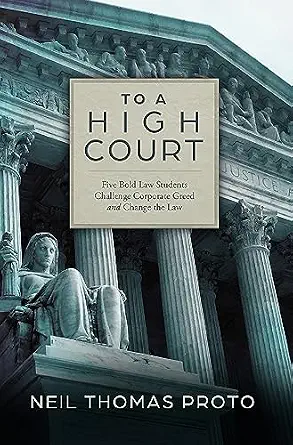
To A High Court, The Tumult and Choices that Led to United States of America v. SCRAP

In fall, 1971, five law students, Students Challenging Regulatory Agency Procedures (SCRAP) confronted the nation’s Railroads’ power and government’s failure. It was a time of tumult. They sued, and in 1973 the United States Supreme Court ruled in favor of SCRAP. A “lesson for holding government accountable could not be more current.” Rosa DeLauro, Member of Congress.

Continue reading

Giamatti: Fearless

Click to Enlarge

Click to Enlarge

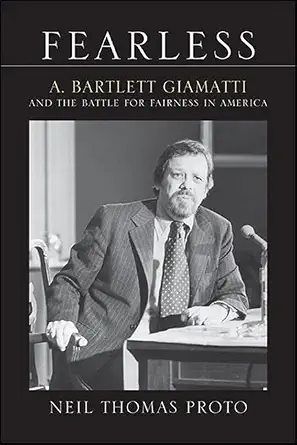
Fearless: A. Bartlett Giamatti and the Battle for Fairness in America

State University of New York Press (2020)

Click to Enlarge

Elria and Bart Giamatti

A.Bartlett Giamatti’s life, how he formed his values, and the principles he lived by—as parent, teacher, president of Yale, and commissioner of Baseball—emerge powerfully in Fearless, A. Bartlett Giamatti and the Battle for Fairness in America. To understand him, you need to understand his parents, especially the discrimination endured by his New Haven born father, his grandparents on both sides, especially his father’s southern Italian immigrant parents, and how Bart came to fully define, embrace, and battle for “fairness.”

Based on more than six years of interviews and thorough, often revelatory documentation not previously disclosed by Yale historians, Pulitzer Prize winning reporter, Nick Kotz, concluded that in Fearless, “Proto writes with the candor, directness, thoroughness, and passionate pursuit of truth that also characterized Giamatti.” Congresswoman Rosa DeLauro focused on the deliberate destruction and forced relocation of Italian and Jewish immigrant and African American families to serve Yale’s purpose that Giamatti witnessed as a student: “Neighborhoods destroyed. Families displaced. Sterilization justified.” Giamatti declared his own civic and moral imperative to do battle: “Rest,” he wrote, “will come by never resting.”
Click to Enlarge
Giamatti as President elect of Yale University

Visit site

Visit Site

Review and audio/visual interview by Paul Bass, New Haven Independent and WTTC (New Haven) HERE

Watch on Facebook or Youtube


Visit site

Visit Site

Interview on Giamatti, Baseball, and Cheating on Fan Radio (Pittsburgh) HERE


Visit site

Visit Site

Interview with AcrossTheMargin.com HERE


Visit site

Visit Site

Interview with lavocedinnewyork.com HERE


Download pdf

Download PDF (Italian language)

Article: Oggi 7 7 Gugno 2020 (Italian language) Download PDF HERE


online book club img

Read the Review

An official Review from OnlineBookClub.org


Yale Alumni Magazine Review (September/October 2020) and NTP Reply

little league img

Read the Article

Click here to read the Yale Alumni Magazine Review


Sacco and Vanzetti IAMLA Live Discussion Trailer


FULL Sacco and Vanzetti IAMLA Live Discussion


A+E Fearless About Fairness

Click to Enlarge

Click to Enlarge


Click to Enlarge

Click to Enlarge

Download the PDF here


Interview at Case Memorial Library, Orange, Connecticut (December 14, 2020)


New Haven and Yale: Giamatti and DiLieto: A historic moment? Or a model?

little league img

Read the Article

Click here to read the article by NTP


Baseball Hall of Fame Donor Recognition: The Unexpected Award

BHF award

Enlarge photo


BHF award

Enlarge photo

Click here to hear Neil speak on the award

Transcript:
In the years it took to research and write Fearless, I visited the Hall of Fame’s Giamatti library and had periodic, wonderfully fruitful exchanges with various people within it. They each give special life and daily respect to the national treasure they preserve, build, and curate. Their tone and the way they execute their purpose always rang loudest and lovingly of family and memories, especially my own in the Little League, in New Haven, and the place of my parents and neighbors and the volunteer coaches, and the values of fairness and caring they each sought to encourage. This certificate they sent me, a thoughtful display of gratitude for a donation that, I hoped, likely touched them deeply, brought me profoundly into those memories and values that still endure, in me and at the Hall of Fame. There are awards in books that are affirming about your work, and then there are the unexpected ‘awards’ in life that matter deeply and permanently. This simple form of recognition was among them.


Neil Proto: A conversation with the author of Fearless (April 26, 2021 at SCSU)


award winner

Read the Article

Bronze Award Winner and Finalist

Fearless was chosen for the Bronze Award in Biography by Foreward Reviews (“dedicated to the ‘art’ of book reviewing”). Fearless also was chosen as a finalist in Autobiography/Biography by The Next Generation Indie Book Awards, the largest International awards program for indie authors and independent publishers established to recognize and honor the most exceptional independently published books (announced on Facebook, June 25, 2021). Below is the interview of Neil by Foreward Review Executive Editor Matthew Sutherland, published on June 22, 2021, with this prefatory observation by Matthew: “The short list of great Americans of the 20th century would be incomplete without the extraordinary A.Bartlett Giamatti.”

Click here to read the article


Daily Herald article: Giamatti’s passing still leaves a large void

daily image

Download the Article PDF

Download the article PDF
or
Read online (paywall)


Neil Proto’s virtual presentation on Valentine Giamatti – Mount Holyoke College


The Battle for Fairness in America

Click to Enlarge

Download the PDF here

Still in Prelude

Inside the Edge of War

In early January 1936, Westly Giovanni-Blair, a Parson’s educated tailor and owner of a men and women’s fashion shop in New Haven, meets Seattle-born Georgetown law professor Richard Bartlett Burton, in a picturesque trattoria on the wave-dashed coast of Fascist controlled Italy. Each is on a personal quest: Can Westly discern in Wales, then Italy the truth behind the missing 18th century portrait that may reveal her family’s ancestral roots? Will she ever find the artist’s family, her family, as her Italian immigrant grandmother implored? Barr has his own imperatives: Who was it that ordered the assassination of his father near his family home in Seattle? Who is trying to stop his appointment by President Roosevelt to a high government position? And get him dismissed from the Georgetown faculty?

Continue reading

White or Black or Shackleton Gray

Excerpt:
“There are moments, sometimes seconds or minutes in duration, when the risk of being outdoors in the cold or the water or on the ice is no longer diminished by gear, clothing, the learned rules of safety, or even the proximity of colleagues. It is when the white clarity of preparation confronts the black reality of nature’s deadly unpredictability, where judgment, physicality, and luck meld together to form the intuitive response to save your limb or life or your journey’s purpose. You’re in the gray.”

Download the full PDF here

Unbowed and Unquestioned Politically II

Excerpt:
“The United States Senate Banking Committee hearings conducted by Ferdinand Pecora yielded disclosures about more than the self‐serving, unethical conduct of the nation’s largest banks and most prominent bank officers. The hearings, perhaps with an intention not originally conceived, also disclosed conduct by Wall Street law firms in the precise business documentation and transactions that deceived existing and prospective stockholders, and the pubic generally, to the bankers’ and the lawyers’ benefit.”

Download the full PDF here

Unbowed and Unquestioned Politically

Excerpt:
“The bared, sordid underbelly of men at City Bank, Chase, and JP Morgan that Pecora’s questioning revealed was permanently solidified into the face that still haunts any predictability or prospect of an ethical-driven normalcy. The current apprehension of what such men are capable of doing, only randomly uncovered to no ones surprise and rarely rectified to even less surprise, remains fairly constant in America….Numerous, unexceptional examples of wrongdoing and bold daring to test the limited resources of even the most responsible government official, are reported daily. ‘Too big to fail”…. will continue until the complete rationale [for such conduct] is questioned and exposed. Ferdinand Pecora sought to examine that rationale in 1933…”

Download the full PDF here

Absent in Body, Present in Spirit: The Tech Trilogy

Short fiction by NTP

Excerpt:
In the early months of 2013, the novelist Mary McCarthy was approached by three colleagues in literature, each concerned in distinct ways by the problematic evolution of their reputation, and how and in what form it might endure into this Century: Ernest Hemingway, John Steinbeck, and Mary Magdalene. Each invited a third person to aid in the dialogue: Dashiell Hammett, David Lean, and Frances Cabrini.

Download the full PDF here

Irreverence, A Book Review

Lawrence in Arabia: War, Deceit, Imperial Folly and the Making of the Modern Middle East by Scott Anderson

Excerpt:
If there was an enigmatic element in Lawrence’s temperament, it may be found in his imagination under pressure, his intuitive skill at melding geographical and military thinking, and the decisiveness of his choices in giving his imagination life. He saw the moment. They were accurate and monumental choices.

Download the full review PDF here

Experience and Family

New Haven, Family, Travel, and Washington, DC


Proto: “I‘ve done a broad range of things, including painting with watercolors and value drawing, which I don’t do enough of, taking courses on film-making and acting, and ballroom dancing with my sister Diana when we were children. DianaNeilDanceNeil A respect for poise came out of the dancing, music used for a purpose, and the value of real experience early. I wanted to play Little League baseball. Third base. The ‘hot spot.’ And with it learning in terms of analogues, the player as model that I wanted to know and emulate but not as a substitute for doing it myself. For sensing in the moment the skill and feeling of the ‘great play;’ the ‘flubbed play;’ and the efforts of teammates striving collaboratively.”

Proto: “I had twenty-nine cousins within walking distance on my father’s side alone. Parental guidance everywhere. It was the Fair Haven area of New Haven. Ethnically diverse neighborhoods. Junior high school, high school, and college intensified the diversity, as did regular Saturday, day-long visits to my Aunt Rosie’s house to play pick-up basketball games with cousins and neighborhood kids. In my own family — I wrote about some of this in ‘The Crimson Horde” and in the ‘Author’ section of Sacco and Vanzetti — two compelling forces were evident: the sharing of memory and my mother’s encouragement to learn and not to be ordinary. It also was learning from the era lived by multiple mentors — parents, uncles, my older cousins, and brother, Richard, and making it my own. Generational obligation went with it.”

RichardNeilDianaProto: “I came to an appreciation of the value of moving sideways, of exploring the range of interests and skills inside of me. Being determined and persistent in that and not being linear. And integrating what I learned into what I knew. Not wanting later in life to wonder whether there were skills or talents I had or knowledge I could appreciate that hadn’t been explored or given enough play to see if joy or a form of excellence was attainable in doing and sharing.”

Soviet UnionProto: “I went to the Soviet Union in 1975, Moscow and Leningrad. It was late January. Snow on every train platform and river. To Czechoslovakia in 1978. Troops and burned out tanks in Prague. China in 1983, when forms of communism — farm communes, uniform clothing, large photographs of Mao and Cho En-Lai — were still evident. I’d studied Marxism in college and graduate school, the ‘Iron Curtain’ still had meaning, ‘loyalty’ to America was still defined in terms of anti-communism, the Vietnam War had been justified on global ideological grounds, the effects of Hitler’s invasion was talked about angrily by officials in Leningrad (now St. Petersburg). I could continue serious dialogue about international affairs with my brother and mother and understand change as it was evolving. It wasn’t just travel, it was the purposefulness of the travel.”

Proto: “I’m taken by the courage and range of knowledge of the British explorers, Richard Francis Burton and Ernest Shackleton particularly. Burton plays into ‘The Photograph’ — his visit to America in 1860. It was part of the imperative for my interest in the Royal Geographical Society of London. I’m still learning about Alaska’s Bush Pilots, pre-GPS.”

Proto: “I love being an uncle and great uncle, grilled fish, and Sally’s Apizza.”

Lawyer

SCRAP, Justice Department, Presidential Committee, and Private Practice


Kennedy posterProto: “While I was in graduate school, during the summer, I chaired Young Citizen’s for Kennedy in Connecticut. Roughly from April to June 6th. Then we spent weeks collecting signatures for gun control legislation. Kennedy was an enigmatic person to me with deep passions, Catholic in a way I came only later to understand in terms of the church’s social teaching, and he was a lawyer. He knew how to do what he believed in; how to use the law for the purpose it was intended: justice. There were other influences that still continue – my parents’ civic involvement and their disquiet about discrimination and especially my mother’s irreverence about institutional authority. They moved me in a direction.”

NeilGWProto: “SCRAP didn’t seem ‘big’ at the time, not to any of us. It did seem like the right use of our time. Once we actually saw our work in written form — the ‘Petition for Extraordinary Relief, ’ which we made up, and the New York Times article — we began to dwell on the financial and political power and geographic reach of our adversaries and how to out maneuver them. It forced us to understand our strength, how to calculate it. We took risks because of it. And to laugh at it, to make parody of it. I try to capture those moments in ‘High Court.”

Proto: “It was both a difficult and purposeful time to be a student. You had to learn fast, to have informed views. There were no neutral moments or discussions.”

StandingRockIndiansProto: “At the Justice Department, the appellate process, the emphasis on law and oral argument before three judges, suited me intellectually. The most challenging work was South Dakota’s harsh, ugly efforts to take major portions of Sioux Reservations with the aid of a friendly judge. Pine Ridge, Rosebud, Standing Rock, Cheyenne River. It was 1890, Wounded Knee, being played out again. Only the United States was on the side of the tribes. I supported the trial lawyer in creating the historical record for the appeal, including interviewing the oldest tribal members in remote South and North Dakota with the help of a translator. We finally stopped the harm at Standing Rock and Cheyenne River, winning before the Eight Circuit. There were other cases — Constitutional arguments, traveling with the Mexican Army and DEA agents into the Sierra Madres to control opium poppies, arguments about the fate of the public lands, historic preservation, and civil actions against industrial polluters but the Sioux cases required moral imperative and the full exercise of the United States’ authority.”

NSOCProto: “Counsel to the President’s Nuclear Safety Oversight Committee was unexpected. I wrote a law review article just before leaving Justice. One reader became Director of the Committee and offered me the position. I was in Connecticut at the time and was back in DC in ten days. The accident at Three Mile Island had rattled the nation and for good reason. Rhetorical support by every president since Truman would make no difference. I got inside nuclear power plants including the unharmed reactor at TMI. It was plain quickly, the imperfections of the utility industry and the critical need for community involvement in emergency planning would ensure nuclear power had no prospect of expansion in the United States.”

Proto: “I made an effort to become a United States Court of Appeals judge that didn’t work politically. That was in nineteen ninety-two or three. I was in private practice in DC. The law then took on renewed meaning, to continue to understand it in the broader context of justice and culture that was central to my temperament and my earlier experience. To have the freedom to pursue it in more personal ways. Louis Brandeis as the lawyer settled-in as the model.”

Proto: “The Disney fight and representing Native Hawaiians are threads of that. The writing I did on Catholic Social teaching, serving as counsel to the chair of the Democratic Platform Drafting Committee, being elected a Fellow at the Royal Geographical Society, the Sacco and Vanzetti writings and organizing, the musical drama and my collaborative role in writing the book and lyrics came out of that, the Civil Rights claims contained in a recent highway fight in Virginia, and establishing over time Seattle and the outdoors as a second venue in life. The knowledge I needed, and the experience, to write ‘The Photograph’ — women’s fashion in the thirties, jazz, architecture, the Black Ball ferry, map making in the Civil War — and moving into fiction or at least trying to, is part of it as well.”

Proto: “One other part of the Justice Department experience. I’d order old boxes of famous case files from the archives. Civil Rights, Indian, foreign affairs, war powers cases. Read the White House memos, FBI investigations, the legal arguments not made. The case as history, not merely law.”

NeilTuxProto: “Getting educated and living professionally in DC was extraordinary: hands on decision-makers, Pentagon-stationed military, hill staffers in your classes or as teachers, accessibility to congress — I interviewed two Senators for my Master’s thesis. You get to see it close — the cynicism, the manipulation, the distortive effect of money, the occasional courage, less common today. DC had opportunities — people came to me for hard and big things. All of my work in private practice was in other parts of the nation. The travel and cultural exposure widened. When I returned to New Haven for a few years — after Justice and again after the Committee — the education continued in local matters. Seeing and working with people who gave civically to improve their community, their lives, their families, and working with the Mayor in governance and political matters to revitalize New Haven. My parents did it. So did I. The two theatre boards I sat on, and the two inaugurations I chaired, were especially valuable in seeing peoples’ contributions.“

Proto: “I like chaos in the law, forcing change in accepted notions. I also like blueberries and roasted almonds, and I can be had by the occasional Hummel’s hot dog and properly done French fries.”

Teacher

Yale and Georgetown

Proto: “I wanted to be a high school history teacher and couldn’t get into the program at Southern Connecticut. Ninety-percent of the graduating class wanted to be teachers. That seeming failure opened up a larger world and I leapt into it and never left. Liberal arts and student government; teachers with worldly experiences and broad notions in their heads; and students with intense commitments to learning and principled views who were encouraged — the teacher as mentor, as parent — to get more formal education. But the desire to teach never left. Or the importance of being the mentor.”

Diana NeilWritingSeattleProto: “My sister was the educator in our family. Diana, a brilliant teacher, a national Milken award winner, innovative in the classroom, a model for public school education, which I, too, was the product of until I left for graduate school in DC. She was especially helpful when the graduate level course at Georgetown I was teaching got larger and I was searching for new techniques to ensure more intimate, engaging educational experiences beyond rearranging classroom chairs, one-on-one discussions, and having students form team debates. It was a wonderful and demanding teaching experience; rated highly by students as well.”

Proto: “The courses were deliberately interdisciplinary and as real and human as I could make them. Looking, for example, at coal’s use through the harshness of mining, using ‘Harlan County, USA’ and the writings of Harry Caudill and how I wrote about coal and railroads in ‘High Court.’ Visits to nuclear power plants when I taught at Yale and the first time at Georgetown. Or integrating into the urban readings ‘The Beats’, ‘Route 66,’ ‘Blackboard Jungle,’ ‘Rebel Without a Cause,’ and Thorstein Veblen. Provoking the family perspective in policy choices, and delving deeper into the life of Dorothy Day, Jane Jacobs, and Michael Harrington. Using the evolution of jazz, and literary works that described urban settings, like Dreiser’s ‘Sister Carrie,’ as preludes to understanding the evolution of Chicago and how it looks and feels. Student papers had to include interviews, drawings, site visits, and law, a comfort with not deferring to lawyers but being able to engage them.”

RichardProto: “My brother, Richard. A remarkable mathematician and public servant to the nation, was a serious thinker throughout his life. His death in 2008 was an unexpected loss, especially my anticipation of moments of recollection as we grew older. Fortunately, with my sister Diana, we already had done much of that including three visits to Italy together. Early in my life he encouraged me to think about history differently. He made it alive and current no matter the era. There were, of course, other influences and experiences that affirmed that. I write it and teach it that way, trying to make the reader be there or the students meld public and private realities and values into classroom learning.”

Proto: “In 1976, I gave the commencement address at my college alma mater. In 1994, I was gratified to receive commendation from my grammar school. On my mind in both places was the mentor, the teacher as mentor and friend. I remembered and praised them by name and the difference they made in choices made, ideas explored, and giving reality to possibilities, attainable — sometimes by indirection or non-linearly — with persistence and hard work and recognizing opportunities when they emerged. I did it in inner city summer programs during New Haven’s urban riots, as a dorm director, a teacher, a lawyer in private practice, as chair of Wilton Park, and my early involvement in the Roosevelt Institution, finding it mutual and gratifying, developing friendships over time, learning from it.”

ProtoOregonProto: “I like the landscape and architecture at the University of Washington, the dialogue in Dashiell Hammett’s books, tuna fish sauce, navy blue, and urban running — the peripheral vision required, changing speeds, and moving sideways.”

Books

Click to Enlarge

Click to Enlarge

Fearless: A. Bartlett Giamatti and the Battle for Fairness in America

State University of New York Press (2020)

A.Bartlett Giamatti’s life, how he formed his values, and the principles he lived by—as parent, teacher, president of Yale, and commissioner of Baseball—emerge powerfully in Fearless, A. Bartlett Giamatti and the Battle for Fairness in America. To understand him, you need to understand his parents, especially the discrimination endured by his New Haven born father, his grandparents on both sides, especially his father’s southern Italian immigrant parents, and how Bart came to fully define, embrace, and battle for “fairness.” READ MORE

Click here to buy on Amazon

Click to Enlarge

Click to Enlarge

To A High Court, The Tumult and Choices that Led to United States of America v. SCRAP

It is the fall of 1971. Richard Nixon is in the White House. The nation is still in turmoil over the war in Vietnam…Within George Washington University, five law students… take on the Nation’s Railroads and the oldest regulatory agency, the Interstate Commerce Commission…They want the unnecessary extraction of natural resources and the impediments to recycling analyzed and stopped. Their name: Students Challenging Regulatory Agency Procedures, SCRAP.”

Click here to buy Amazon e-book

Click here to buy on itunes for iOS books

Visit https://www.ToAHighCourt.com

Radio Interview (2006), To A High Court (mp3 audio file)

Click to Enlarge

Click to Enlarge

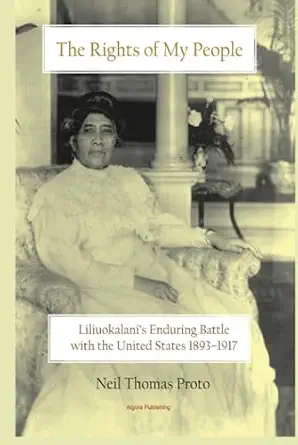
The Rights of My People, Liliuokalani’s Enduring Battle With the United States, 1893 to 1917

January 1893. Hawaii. The United States Navy stood poised. Gatling gun and bayonets in place. The Navy’s military prowess was intended to displace the native Hawaiian culture and the constitutional monarchy in place for fifty years. Poised, as well, was Queen Liliuokalani…. She took the long view….The Rights of My People examines the two battles for Hawaii’s sovereignty. Liliuokalani led them – the 1893 coup d’état and annexation in 1898 through a new perspective: The harsh remnants of the Civil War, the missionary’s disquieting view of race, and the Renaissance and newly defined role of Hawaiian women. Explored for the first time is the second battle – the fate of the Crown lands, a quarter of the Hawaii islands, taken in the 1893 coup d’état…. and contested aggressively by Liliuokalani through 1910…in the Nation’s capital.”

Click here to buy book

Visit https://www.RightsofMyPeople.com

Radio Interview (2009), Rights of My People (m4a audio file)

SaccoVanzetti

Click to Enlarge

The Enduring Meaning of Bartolomeo Vanzetti and Nicola Sacco Within the Italian American Experience

“This body of work has reflected my intention to encourage a colloquy about the meaning and effects among Italian immigrants and Italian Americans of the fight for the lives of Bartolomeo Vanzetti and Nicola Sacco…. It was not a lonely journey….The work was written, presented orally, organized, or performed between 1996 and 2002.”

Visit https://www.SaccoVanzettiExperience.com

Articles and talks

Writing and Speaking Over Time

NTProto Headshot new

The substantive range and content of the selected articles and talks speak for themselves—space exploration, baseball, nuclear power, urban culture, basketball, Mexican drug trafficking, Catholic Social Teaching, and others. They reflect what I describe elsewhere—moving sideways, exploring substantive interests and integrating them into what I know. They all share an exploration of culture and underlying values, making judgments among competing social forces, deciding what’s right and risking criticism but not at the loss of ideas. The most personal articles: “The ‘Crimson Horde’ captured the Soul of New Haven”(2008), published on the precise day of the 50th anniversary of the victory celebration and written within months of my brother Richard’s death; and “Preservation of Baseball Tradition is at Stake in Rose Affair”(1989), written from the perspective of having played “third base for Golden Crest during the 1956 season of the Annex Little League.” I also knew Bart Giamatti during his tenure as President of Yale. He died shortly after the article and his decision concerning Pete Rose’s fate.

The most revelatory article: “The Essential Controversy: The Catholic Church, Its Social Teaching in America, and Those Who Have Defined It.” (2005). Writing it provided a useful perspective on what motivated many Catholics toward social justice, sometimes intuitively, who wondered why the Church had moved so dramatically away from an emphasis on its own teaching. The work also provided insight for me into the Supreme Court, as it grew more Catholic in composition, and the broader debate in America about individual, corporate, and governmental duty that continued to inform my writing and actions.

Thinking and Doing Theatre and Movies

The ‘Skit,’ Dancing, Music, Dan Lauria, and The New York Film Academy

Proto: “Between the age of two and seven we lived with my maternal grandparents. This was the creative side of our family: artists, tailors, wood craftsmen, dancers, food makers, owners of the first generation of record players, film cameras, and projectors (we still have that clunky, magical projector). They also were keen fans of live television, black and white movies, baseball players, and all the related popular personalities. Most lived and worked in New York and came into New Haven with frequency and informality and with the same ease that family members visited New York. That knowledge and skill got shared in many ways generationally, none more engaging than the ‘skit’ — aunts, uncles, and children mixing together to make up stories in a few moments off in a corner, and act them out before family, always intended to be a bit ribald, parodies of life or movies or movie stars or relatives in the room. No scripts, mostly silent, minutes in duration, with lots of facial expression, body movements, ad hoc props, and playing roles without regard to gender.”

DianaPianoProto: “My sister, Diana, and I began dancing then. My brother Richard and Diana began learning to play the piano. Our home was quiet when the lesson or practicing was in progress. Whatever classical music they learned, at holiday time the popular music — my dad was the singer — was an essential part of setting the celebratory mood.”

DianaNeilDanceProto: “The dancing was theatrical. Forming the routine, it’s choreography, practicing, knowing the music, collaborating with each other and our teacher, my mother and uncle designing the clothes, and then performing. Timing, lights, poise, positioning on stage, the occasional mistake and recovery, the audience, and — credit my uncle and father — still having film of some of it.”

Proto: “Publicity was involved and so was dealing with diverse people we often hardly knew, older, seeming to enjoy their experience, a few seeking a career in a way we did not.”

Proto_DEP_of_JusticeProto: “There is theatre in the law — the oral argument before three judges, reasoned, persuasive, some portions memorized waiting for a cue or used to set the tone. Positioning behind a podium, facial and hand movement, listening to questions and responding, understanding the dynamics and theatrics among the judges as you do, and the broader societal dynamics in play during the argument, who you’re representing and what that conveys. Using the brief as history and script, your adversary as the antagonist, and the uncertainty, the accidental moment as things unfold to be recognized and exploited if necessary, like recognizing the unpredictable moment retained in a John Ford movie that separates it — like the persuasiveness of your argument — from others.”

NeilDianaLauria ProtoProto: “I met Dan Lauria in 1993, although we had overlapped at Southern Connecticut State University as students. And shared a dear mutual friend in Mike Adanti, then the University’s president. Dan already had done ‘The Wonder Years’ and was a well-known actor, a solid historian intent on bringing historical characters to life, respectful of the past, thoughtfully working with and learning from older actors, Peter Falk, Charlie Durning, Jack Klugman, imaginative in ways that were extraordinary, especially with encouraging new play writers through his Kitchen Ensemble in LA, which my firm organized pro bono. It was through him that I met writers, actors, directors, and producers, visited him in LA to see play readings, plays at a variety of theatre sizes, his rehearsals and interviews, and the bold, confident and respectful way he and others gave new, spirited life to Steve Allen’s ‘Meeting of Minds.’”

Proto: “Attending Dan’s performances on the east coast, like Arthur Miller’s ‘The Price’ and ‘Lombardi’ on Broadway was an incalculable education — seeing the evolution in the writing, the acting, talking to the people doing lighting, sound, handling props, making the process and personalities flow. The choreography and music in ‘A Christmas Story,’ — Dan working with remarkably skilled child actors and complex dancing, acting, and singing arrangements.”

Proto: “Dan guided me through the learning curve of writing a play and movie and has been a thoughtful teacher as I read, with a different intention, play and movie scripts and watched how fiction or historical characters were transformed into theatre and movies. He encouraged me to write a treatment for ‘High Court’ and critiqued it.”

AmericanDreamProto: “When I heard the music from Sacco and Vanzetti I wanted it heard in the United States. Sol Hurok. Okay that’s a little overstated. Though I did go to Belgium, met the composer and writer, and watched a recorded production of the original in Dutch.”

Proto: “I had comfort with music — the lyrics to rock n’ roll, big band sounds, television themes. The generational sharing and era ensured it. When I got to the Sacco and Vanzetti musical drama, ‘The American Dream,’ keeping the music in sequence and rewriting the book and lyrics, I was comfortable doing it in a fairly rushed context, trying collaboratively to give life to a new approach.”

UnblockingLifeStillProto: “The brief course I took at the New York Film Academy in two thousand and seven was part of the education. Wanting to experience the collaborative effort in making a simple movie. Hands on. Conceiving and writing a script, acting and directing it, in this case working with another student, Robert Merisca, and benefiting from the camera skill of another colleague, Jordan. ‘Unblocking Life,’ Robert called it — the screenwriter who couldn’t find an idea and the Roaming Muse — me — intent on giving him one.”

ProtoActorProto: “I felt like I was in ‘Fame.’ Intense, vivid, me as the relative elder, knowledgeable in my way and disciplined about the schedule, in a setting of dedicated, dream-driven kids with skills I respected and, in their talent, educated me.”

Proto: “I also felt like Bruce Weitz’s Belcher in ‘Hill Street Blues.’”

Proto: “Acting for People over Fifty’ — when I was living on Bainbridge Island. Everyone willingly sharing his or her limitations and talents. Being on stage, maybe with a chair. Usually not. Usually just the raw script or your imagination.”

On the Edge of America

Excerpt:

“The tide was coming in. It was late February. The beach eroded around and beneath you. A simple misstep off the slimy rocks or embedded jumble of jagged-edged timber or getting caught in the sinewy, bulbous sea grass and you ‘d be sucked easily into the fearsome undercurrent. The rough pounding and spreading burst of cold surf along the Straits of Juan de Fuca were relentless.”

To read more, download NTProto_OntheEdgeofAmerica.pdf

Work in Law and Teaching

WorkLawTeaching

NTP has crafted written legal arguments and broader litigation strategies or presented oral argument in more than thirty-five cases in federal court litigation, primarily in United States Courts of Appeals beginning with SCRAP versus United States of America in 1971, during his time at the United States Department of Justice, and in private practice. He has briefed cases before the Supreme Court of the United States including as amicus curia. His most recent participation in litigation was in Arlington County, Virginia versus United States of America and the Commonwealth of Virginia in the United States District Court for the District of Columbia, a highway controversy involving civil rights and environmental violations that ended successfully in 2011. His last oral argument was in 2004 before the United States Court of Appeals for the Fourth Circuit in Richmond in a controversy involving the 14th Amendment’s equal protection clause. Substantively, his body of work in the law has involved Constitutional questions, land use, a broad range of environmental statutes, public lands, civil and criminal jurisdictional disputes, urban controversies, Native Americans, Native Hawaiians, historic preservation, foreign affairs, and nuclear power.

Although various of his articles and talks involve the law, NTP’s law review article, “The Opinion Clause and Presidential Decision Making,” (44 Missouri Law Review 185 (1978)), was premised on his exploration of the Opinion Clause, Article II, Sec 2 of the Constitution, in a controversy involving presidential advisers providing guidance on major water projects in North Dakota that reached the United States Court of Appeals for the Eight Circuit in St. Louis.

His body of work in teaching is reflected in the syllabi and compilation of substantive, multi-disciplinary readings, documentaries, and educational techniques he has developed in twenty-four years of teaching and lecturing, as visiting lecturer at Yale University and adjunct professor at Georgetown’s Public Policy Institute. In his courses on cities and sprawl he has used, for example, Theodore Dreiser’s Sister Carrie and Frank Norris’ The Pit to imagine Chicago, Christopher Lasch’s The True and Only Heaven to assess family values, Detroit’s urban riots in “Eyes on the Prize,” the insightful urban impulse of The Beats when others embraced suburbia, urban organizing by Saul Alinsky and Martin Luther King in Chicago, and the cultural drive of television’s “Route 66.”

Implicit Danger

Excerpt:

“As the sun rose but not confidently, Anne detected distant rain and I yelled out a sudden increase in velocity and decrease in depth. It was plain the variables in tides and wind, current and weather retained their ill-defined meanness if miscalculated. The boom still able to swing unexpectedly into your head and the boat, gliding at top speed of five knots, still leaning precariously on its leeward side as the black water swirls and foams and whips by you, a hundred feet or more of it below, still able to swallow you in moments.”

To read more, download NTProtoImplicitDanger.pdf

The Lawyer, A Book Review

Louis D. Brandeis: A Life by Melvin I. Urofsky

Excerpt:
A specter is haunting the nation. Theodore Dreiser’s Frank Algernon Cowperwood; the financier, the titan, “perfectly calm, deadly cold,” selling stock he did not own. As the banker, he was entrusted with other people’s money. “[L]ike a spider in a spangled net, every thread of which he knew, had laid, had tested, he surrounded and entangled himself in a splendid, glittering network of connections, and he was watching the details.”

Download the full review PDF here